


THE PROJECT
The background and the book on Caresto

Institutional Foreword
Vittorio Fiorucci, Mayor of Gubbio
The study of a single historical episode, such as that of Caresto Castle, represents a valuable opportunity not only to delve into the specific events of a local reality, but also to reflect on wider phenomena, such as the process of encastellation and the complex system of relationships between city and countryside in the Middle Ages.
In particular, the analysis of Caresto’s history allows for a better understanding of the political and economic dynamics that characterised the territory bordering the contado of Perugia—a powerful and ambitious city, often in conflict with rural lordships and their castles.
Through this research, we can therefore bring to light the tensions, alliances and transformations that determined the layout of the territory in the medieval era and beyond; indeed, the study retraces its history up to the modern and contemporary ages, from splendour to decline.
A second aspect that makes this type of study significant is the rediscovery and enhancement of our oldest and most original historical heritage. Knowledge of these realities allows us not only to reconstruct the past, but also to promote its dissemination to a wider audience, both academic and tourist. Cultural tourism, in fact, is increasingly establishing itself as a fundamental resource for the enhancement of our heritage, enabling local communities to rediscover and share their history with visitors interested in the memory of the area.
In this sense, the study and protection of sites such as Caresto Castle fit fully within the regulatory framework outlined by the Italian Cultural Heritage Code (Legislative Decree no. 42/2004, Art. 1), according to which "the protection and enhancement of cultural heritage concur to preserve the memory of the national community and its territory, and to promote the development of culture."
Protecting and promoting these places, therefore, means not only safeguarding a historical legacy that belongs to everyone, but also making a wealth of knowledge accessible to the general public, which deserves to be passed down to future generations.
PROJECT BACKGROUND
Introduction and motivations behind the project
Giuseppe Bariona and Roberto Sanvito
The heart of Umbria is enriched by an ambitious project: the rediscovery and enhancement of Caresto Castle, a medieval site in the Gubbio territory of profound historical, scenic and cultural value.
The meeting between entrepreneurs Giuseppe Bariona and Roberto Sanvito and historian Giorgio Uberti has sparked a synergy between innovative vision and historical expertise. Thanks to archival research conducted in collaboration with Roberto Anelli, the castle’s prominence in centuries of history—both at a local and national level—has been brought to light.
This historically rich place, though almost entirely forgotten, continues to live on in the memory of the communities through ancient folk traditions.
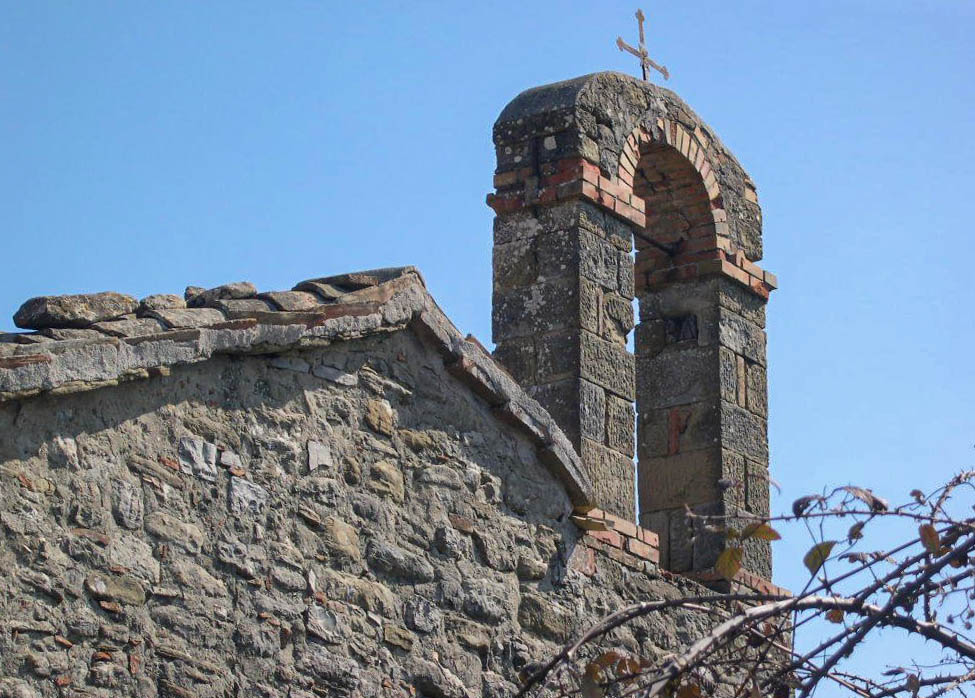
The remains of Caresto Castle, reclaimed from the woodland vegetation, recount in all their charm a history spanning centuries, restoring an invaluable tangible and intangible heritage to local communities. Visitors can immerse themselves in a fascinating journey into the past, guided by a historical narrative supported by original documents that retraces the site’s events from its medieval origins to the present day.
Conclusions and future prospects
Roberto Anelli and Giorgio Uberti
The project to rediscover and enhance Caresto Castle was born with the intent of bringing to light a medieval site of great historical, scenic and cultural value, especially given its location surrounded by contemporary watchtowers and reciprocal strongholds. Through meticulous archival research and diligent fieldwork, we are striving to reconstruct Caresto's role from its earliest records onwards—keeping in mind the broader phenomenon of Umbrian encastellation—and to understand its links with the surrounding territory, particularly with Gubbio, Perugia and Assisi.
The investigation has highlighted how Caresto Castle, which had been completely abandoned over the last half-century and cyclically engulfed by dense vegetation, held a strategic function in local political and social dynamics for centuries.
Thanks to funding from Rinlandia and the synergy between various stakeholders, it has been possible to launch a recovery process that combines historical research and material analysis to foster cultural dissemination, laying the foundations for both tourist and academic enhancement.
The study of Caresto fits into the wider debate on encastellation in Umbria, a phenomenon often overlooked compared to other Italian regions and the paradigms of medieval archaeology.
The research demonstrates how a multidisciplinary approach, combining archaeology, history and technology, can restore identity to forgotten places and promote the recovery of their tangible and intangible heritage.
Currently, the project is still in its initial phase, involving preliminary site clearing, historical-archival analyses and initial proposals for heritage enhancement.
However, the work on Caresto presents certain challenges. Archaeological excavations have not yet commenced, and many questions regarding the castle's function and evolution remain open. Furthermore, the scarcity of documentary sources complicates the historical reconstruction of specific periods. To address these critical issues, the next phases of the project will include non-invasive surveys, such as magnetometry, alongside the involvement of archaeological teams—preferably from universities—to initiate a systematic excavation that progresses alongside the tourist-cultural enhancement of the site.
The company is heavily focusing on university integration, aiming to establish a public archaeology initiative within the territory and shaping Caresto into a cultural hub for research.
Another key objective is the creation of a GIS (Geographical Information System) database to collect and organise existing data on Umbrian encastellation. This will facilitate comparisons with other regional sites already studied, potentially leading to the identification of new locations or historical developments linked to Caresto.
In terms of public engagement, the website and a point-by-point guided tour are now accessible to involve an ever-wider audience. Social media integration will be essential to build visitor loyalty and strengthen the "Caresto Brand" identity. Additionally, efforts will be made to integrate the castle into tourist itineraries connecting the main Umbrian cities, creating a coherent and captivating narrative of the region.
Collaboration with local communities and institutions will be a key element in ensuring sustainable management of the site.
The concept of an ongoing excavation and a long-term research project will keep the spotlight on Caresto, transforming it into an open-air laboratory for scholars and medieval history enthusiasts.
From a forgotten place, Caresto Castle is once again becoming a benchmark for research, conservation and cultural promotion. The road ahead is still long, but the path is set: the story of Caresto is not just that of a medieval castle, but a symbol of how the past can be recovered and enhanced to build the future.
THE BOOK
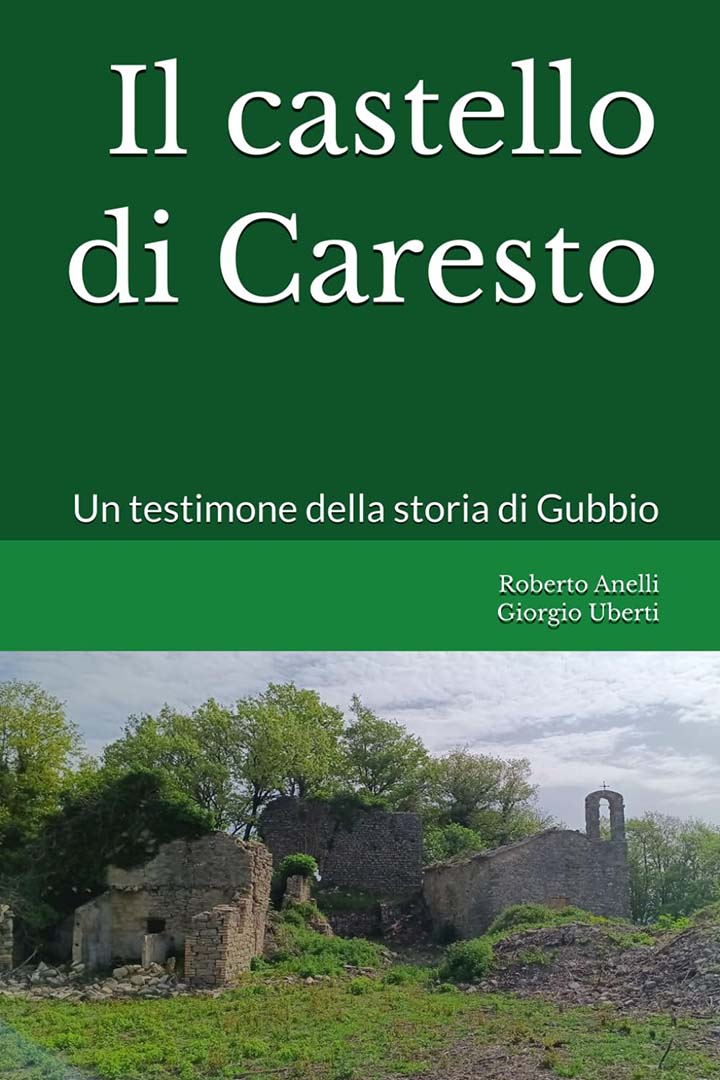
by Giorgio Uberti and Roberto Anelli
(2026)
This volume is the result of extensive archival research, paired with diligent fieldwork, aiming to reconstruct the history of Caresto and its community from its earliest documentary records onwards.
The investigation fits into the broader framework of the Umbrian encastellation phenomenon, offering a detailed analysis of the relationships between the castle and its surrounding context.
Through the analysis of sources and material evidence, the profile of a significant settlement emerges, shedding light on the settlement, social and territorial dynamics of medieval Umbria, within a continuous dialogue between local history and wider historical processes.
Roberto Anelli (Gubbio, 2002), graduated in Historical and Cultural Heritage Sciences from the University of Siena and is actively engaged in the sector.
He works at the MUAM – Museum of Arts and Crafts in Gubbio, where he created the ArcheoLabproject, which introduces young children to Gubbio’s archaeological heritage through a learning by doingapproach, combining experimental archaeology and applied arts.
Giorgio Uberti (Milan, 1986), holds a Bachelor’s degree in Social Phenomena Sciences (2010) and a Master’s degree in Applied Social Sciences (2013) from the Università Cattolica del Sacro Cuore in Milan. He also completed a second-level Master’s in Public History (2016) at the University of Modena and Reggio Emilia.
He is a freelancer specialising in historical research aimed at the creation and dissemination of cultural content.
© 2026 | All rights reserved | Credits
Daniele Marchetti
Web Development, Design & Graphics
Giorgio Uberti e Roberto Anelli
Content, Photos & Historical Research
Giuseppe Bariona
Coordination & Production